Kingdom
Animalia
All animals

There are two widely recognized species of wolves in the world, the red and the gray. However, there is debate over how many species of wolf exist and if there are different subspecies of the gray wolf. Additionally, there is a little-known canid, which lives in the Ethiopian highlands called Canis simensis that is thought to be a very close relative of the wolf.
Taxonomy, or classification, is the system of categorizing all living things. Living things are separated into different categories based on morphological similarities and/or common ancestry based on genetics.
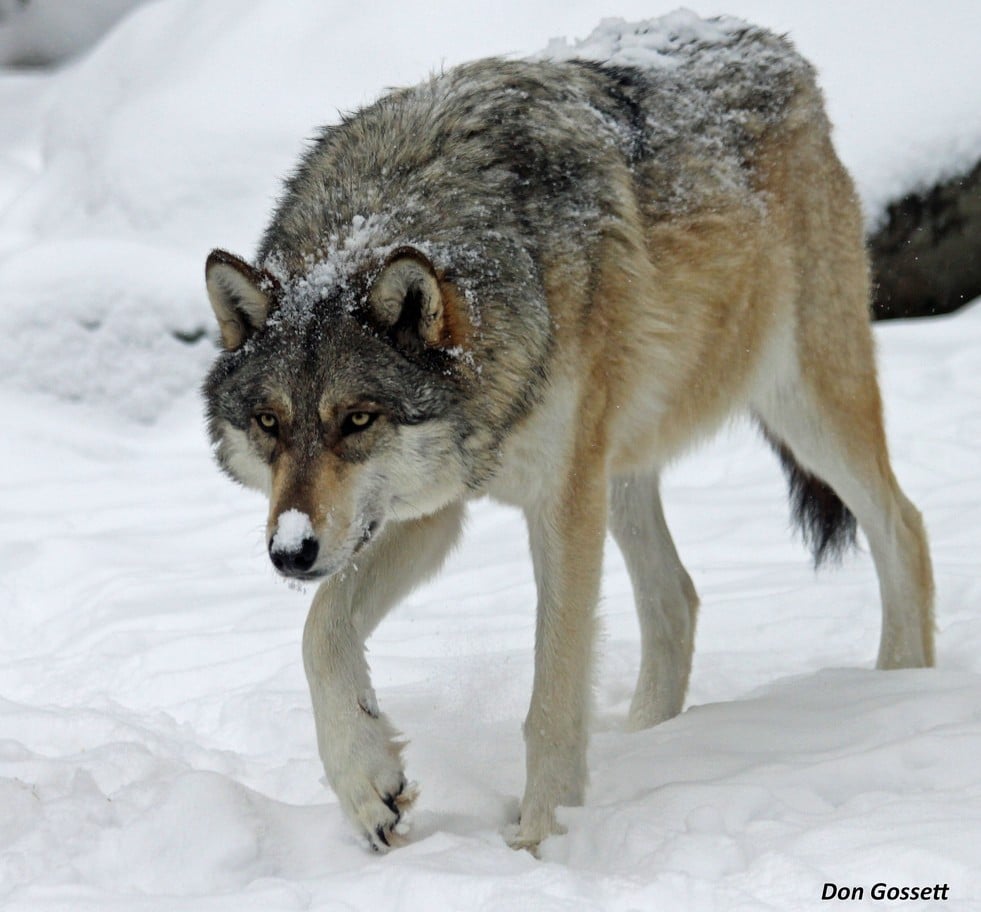
Examples of other Canid Species
Canis latrans (coyote), Canis aureus (golden jackal),
Canis mesomelas (black-backed jackal), Canis adustus (side-striped jackal),
Canis familiaris (domestic dog, dingo – in review),
Canis simensis (Abyssinian or Ethiopian wolf), Canis lupaster (African wolf)
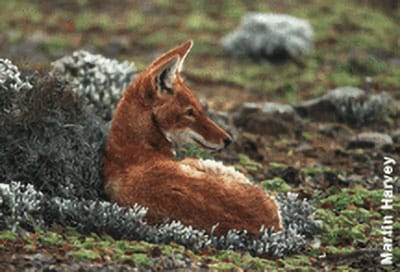
Ethiopian wolf (Canis simensis)
Every living thing on earth has a unique scientific name consisting of two words in Latin, which are always italicized. The first letter of the first part of the name, the genus, is always capitalized in writing, while that of the second part, the species, is not. Therefore, the gray wolf’s scientific name is Canis lupus. This naming system is referred to as binary nomenclature and is the same all around the world, which helps people who speak different languages talk about the same species without question. Scientific names are often descriptive and give insight into one species’ relationship to another species.
Unlike scientific names, common names are not always unique and vary by culture and geographic region. For example, a gray wolf living in a forested area might be called a “timber wolf” while a gray wolf living on the tundra might be called a “tundra wolf”. While they may be known by different names in different places, they are still the same species from a taxonomic perspective.
The canid family consists of thirty-five living species. Eight of these species inhabit North America. These North American species include gray wolves, red wolves, coyotes, red foxes, gray foxes, kit foxes, swift foxes and arctic foxes. The eight species may be organized in three general categories: wolves, coyotes and foxes.
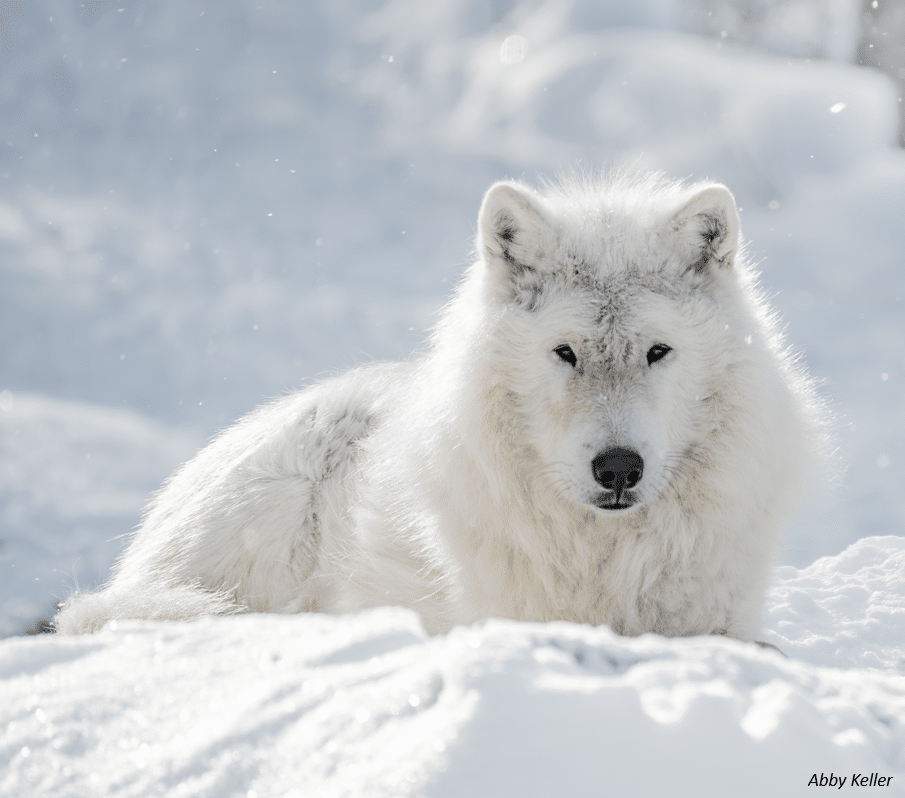
Arctic gray wolf (Canis lupus arctos)
Wolves are the largest members of the canid family. This is the species from which our domesticated dogs share a common ancestor with. Wolves were once the most widely distributed, wild terrestrial mammals. They inhabited most of the available land in the northern hemisphere. Due to the destruction of their habitat and persecution by humans, they now occupy only about two-thirds of their former range worldwide, and only about 5-8 percent of the contiguous 48 United States.
Wolves can be found in a variety of climates and habitats. These habitat variations are sometimes seen in the type of morphology, or physical characteristics, seen in gray wolves living in different geographical areas. These differences sometimes differentiate types, or subspecies, of gray wolves around the world.
However, these different types are so subjective that over the years scientists have disagreed in the number of subspecies found in North America. A recent study based on morphological evidence, argued for a single pool of North American gray wolves (C. lupus) in the northern region of the continent. Despite the lack of morphological evidence to support various North American gray wolf subspecies, and the eastern wolf as a different species, genetic studies have found molecular evidence that suggests three wolf species in North America: the red wolf (Canis rufus), the gray wolf (Canis lupus), and the eastern wolf (Canis lycaon).
Past studies often recognized five North American subspecies: arctic wolf (Canis lupus arctos), northwestern wolf (Canis lupus occidentalis), Great Plains wolf (Canis lupus nubilus), Mexican wolf (Canis lupus baileyi) and the eastern timber wolf (Canis lupus lycaon). In reality, any differences among all these proposed types, or subspecies, are so minor as to be meaningless except to a few specialists.
Red wolves (C. rufus) are only found in a small area of coastal North Carolina. They are a North American species of wolf not found elsewhere. Their social and predatory behaviors are the same as gray wolves.
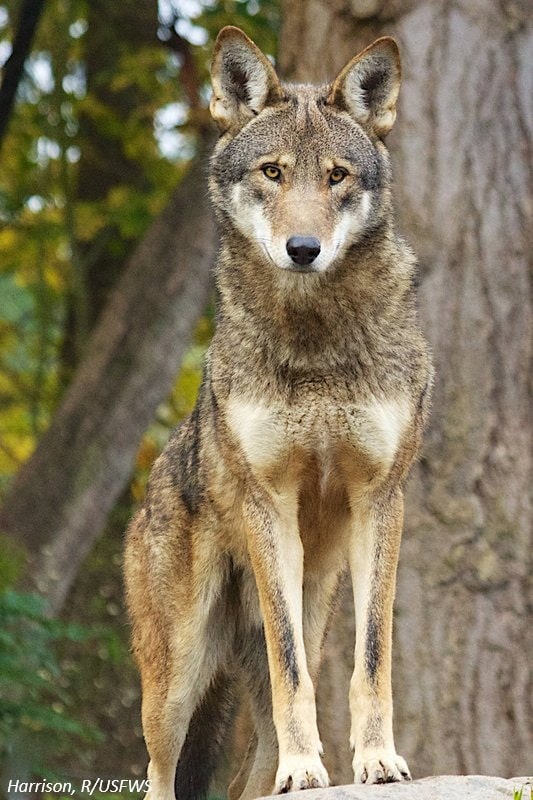
Red wolf (Canis rufus)

Eastern coyote (Canis latrans)
Coyotes (Canis latrans) are smaller than most mature wolves. Resilient animals, they have higher population numbers and inhabit a much larger range than do wolves. Coyotes are able to adapt to change and have a strong tolerance for human encroachment. Many people have used the terms “brush wolves” or “prairie wolves” when referring to coyotes. Coyotes, however, are not wolves. Coyotes and wolves are in the same family (Canidae) and genus (Canis), but are separate species, just as foxes and wolves are separate species.
Like wolves, coyotes have been persecuted because of their predatory nature. They are still trapped and killed in predator control programs throughout North America but continue to thrive.

Red fox (Vulpes vulpes)
Foxes match the coyote’s ability to cope with civilization. Foxes are in the same family as wolves and coyotes (Canidae) but not the same genus. Gray (Urocyon cinereoargenteus) and red (Vulpes vulpes) foxes inhabit about three-quarters of the United States. Swift (Vulpes velox) and kit (Vulpes macrotis) foxes inhabit only small portions of the western United States. Arctic foxes (Alopex lagopus) live in the northern portions of Canada, Alaska and outlying areas of Greenland.